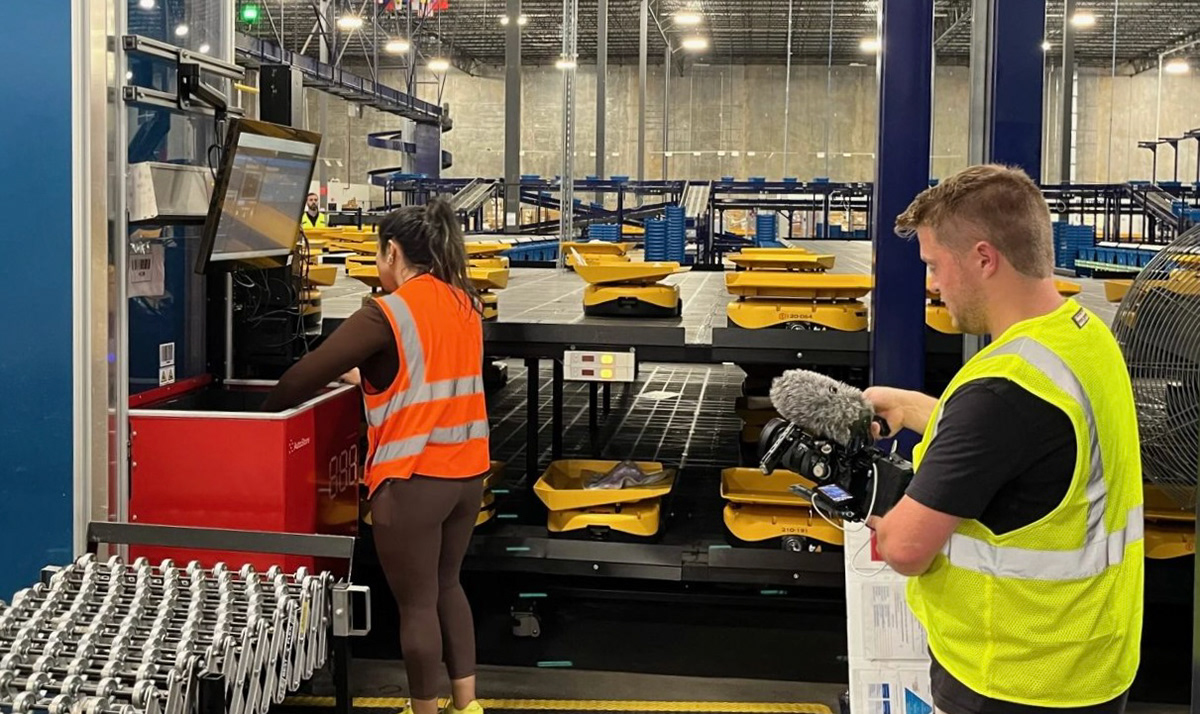
Filming on the floor at LT Apparel. The machines were the whole reason KPI could tell this story.
Everything that makes a manufacturer worth hiring happens on the floor. Almost none of it survives a spec sheet.
A buyer comparing three suppliers on paper sees capabilities, certifications, and lead times. He does not see the machinist who caught a tolerance problem nobody else would have noticed, or the twenty year operator who can hear when something is about to go wrong. That is the part that makes the difference and it is the part that never makes it into the sales conversation.
That gap is what we film.
What we make
Brand story video. The one that answers why a buyer should pick you. Usually three to five minutes, built from real interviews with the people who do the work.
Case study video. One project, one outcome, told by the customer rather than by you.
Recruiting video. For plants that are not short on work, they are short on people.
Safety training modules. Filmed on your floor, not a rented warehouse, so the people watching recognize where they are.
Social cuts. Twelve to fifteen shorter pieces out of the same shoot day.
The question we ask first
It is not about video.
What makes you different from the other companies bidding the same work?
Most owners cannot answer that in a sentence. That is not a failure, it is the finding. If four suppliers all say quality, on time delivery, and family owned, the buyer picks on price because nobody gave him anything else to pick on.
We spend the first part of every project figuring out the thing only you can say. Everything after that is just how we say it.
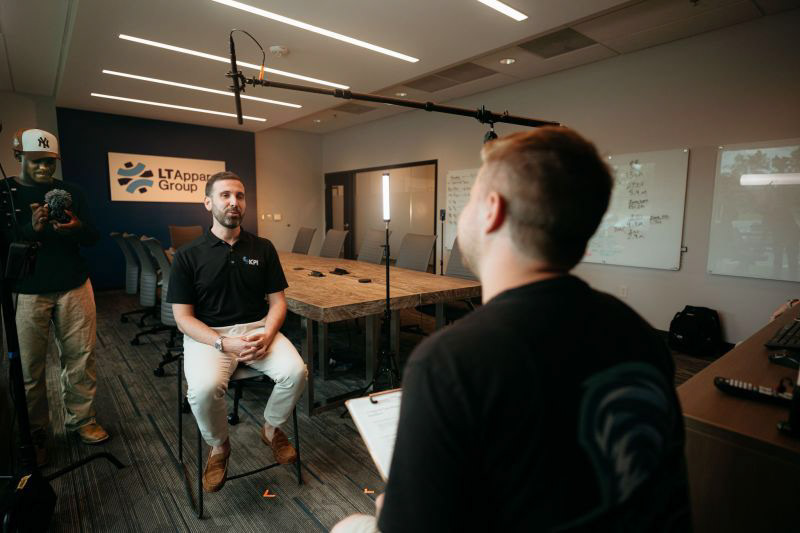
Interviews usually happen in a conference room. Quiet, fast, and people are out in twenty minutes.
What happens on your floor
Production keeps running. That is the whole approach.
The only people who lose time are the ones being interviewed, and each one is gone for about twenty minutes. We set up before they walk in and they leave when they stand up. Everyone else keeps working while we film around them.
Nothing gets staged. Nobody is told where to stand. No line stops for a shot.
If a production company needs your floor cleared or your line paused, that is a commercial shoot, and most manufacturers do not need one. Here is the longer version of what a shoot day looks like, and what filming actually costs you in production time.
What one day produces
A single shoot day usually turns into a main video plus twelve to fifteen shorter cuts.
On one project, a handful of shoot days produced over fifty finished pieces. Most companies use about ten percent of what they paid for and then decide video does not work for them. The footage was never the problem.
The jargon problem
Manufacturing has a language problem that most industries do not.
The people who understand your process cannot explain it to anyone who does not, and the person deciding whether to buy from you often falls in the second group. A CFO, a procurement lead, a facilities director who has never run a line.
So we ask people to explain it like they would to a fifth grader. Not because the buyer is simple, but because a busy person who cannot follow it stops listening.
We made a case study video for a warehouse automation company about a five times output increase, and there is not a word of industry jargon in it. That one is here.
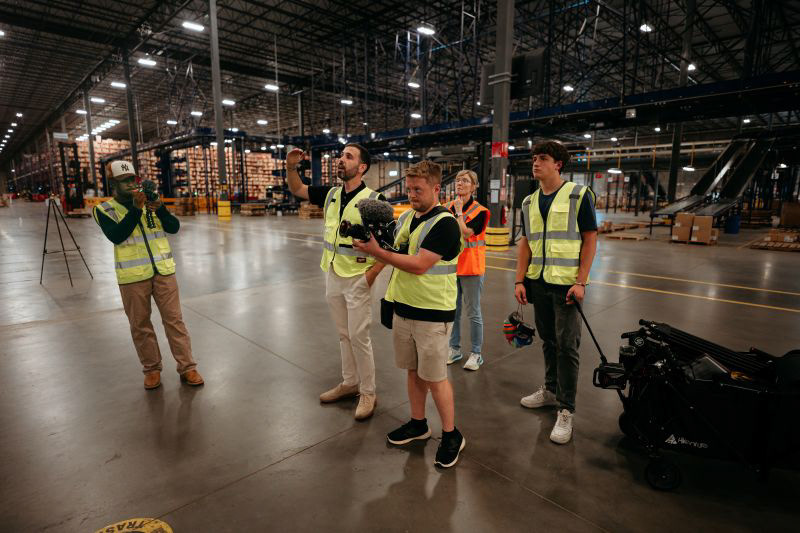
Full crew on the floor. Everybody in vests, nothing staged, production running the whole time.
Work
A security door manufacturer whose owner had a SWAT team try to breach his product. A flame detection company founded by firefighters who knew alarms fail. A warehouse automation firm that could not explain what they do in a conference room.
Where we work
Greensboro, Winston Salem, High Point, Burlington, and the greater Triad. No travel line item anywhere inside it.
More on manufacturing video What makes a good industrial product demo video Manufacturing recruitment video: what actually works
Dylan Smith is the owner of With A Twist Media in Greensboro, NC. He has been making documentary style video for manufacturers and construction companies across the Triad since 2019.