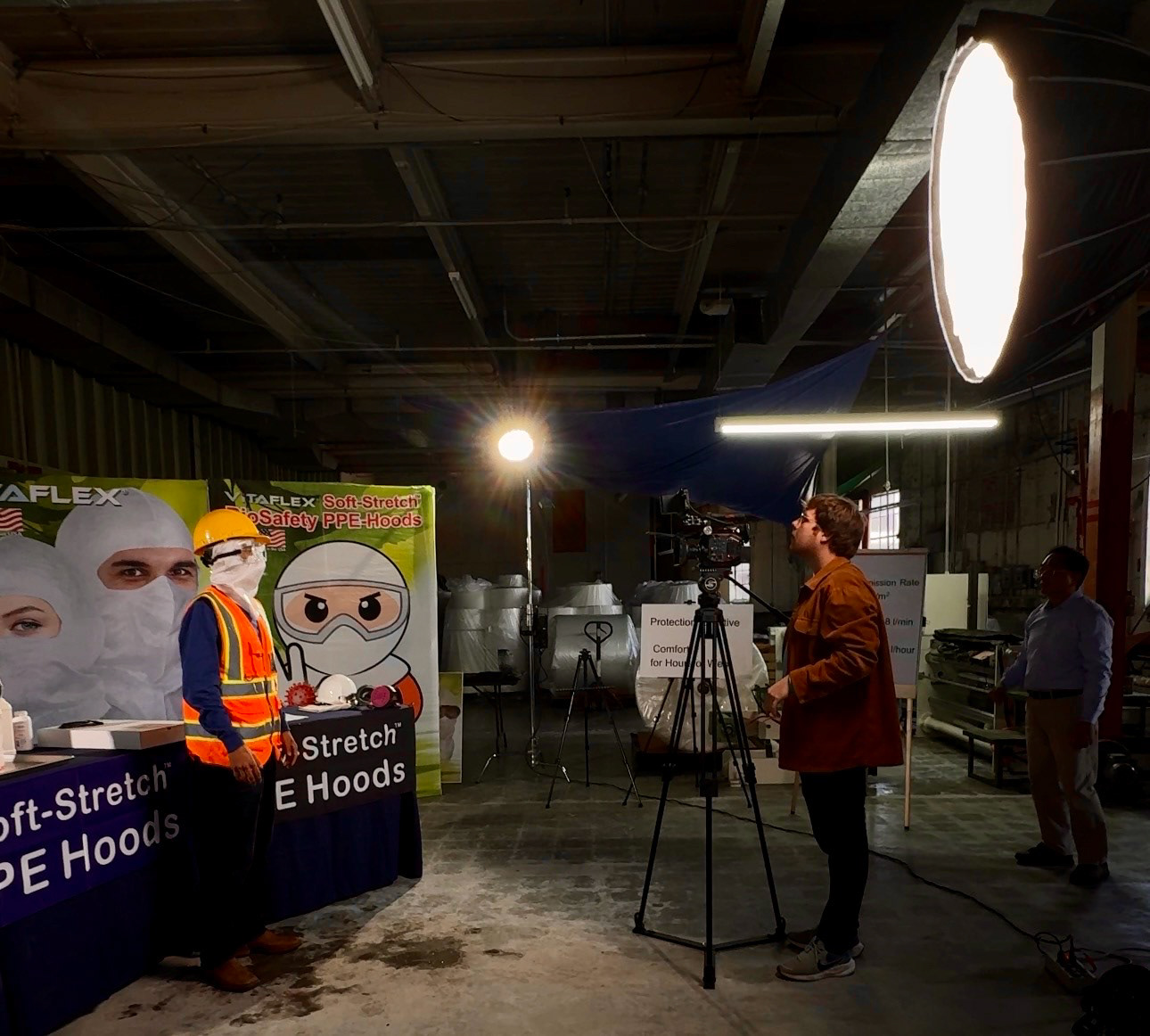
A trade show display setup, lit and filmed. Built to work on a loud floor with the sound off.
At High Point Market there are several hundred exhibitors competing for the same walking traffic. Most of them say a version of quality, service, and family owned.
A video on a booth screen has about five seconds to be worth stopping for, and it has to work with the sound off.
That constraint changes everything about how it should be built.
The sound is off and nobody is standing still
Two facts decide the whole format.
Trade show floors are loud, and nobody is going to lean in to hear your booth screen. Whatever your video says has to land visually or through text, not through narration.
And the viewer is walking. They are catching your screen in peripheral vision while heading somewhere else. If the first frame is a logo animation or a slow establishing shot, they are gone before anything happens.
What works on a booth screen
Motion in the first frame. Something happening immediately. A machine running, hands working, a product being used. Not a title card.
Short loops. Thirty to ninety seconds that repeat cleanly. Long videos mean most people see the middle of something they do not understand.
Text that works alone. If the video makes sense with the audio muted, it works. If it depends on narration, it does not.
Something they cannot see at the next booth. This is the hard part and it is the whole game. Product shots look like every other product shot. What does not is process, people, and the specific thing you do that nobody else does.
The question worth asking before you film
Most exhibitors ask what should go in the booth video. The more useful question is what you want somebody to remember three days later, back at their office, looking at a stack of business cards.
Almost nobody buys on the floor. The floor creates a shortlist. What you are actually competing for is being the one they remember well enough to follow up on.
That means the video is not a sales pitch, it is a memory device.
Getting more than three days out of it
A trade show is a bad reason to make one video and a good reason to make several.
The same shoot that produces a booth loop can produce a website video, a set of social cuts, sales emails, and follow up content for the leads you collected. The footage does not know it was shot for a trade show.
Planning for that before the shoot costs nothing. Planning for it after means reshooting.
Follow up content is the piece most exhibitors skip entirely. You come home with a list of people who stopped at your booth, and then you send them a text email. A short video referencing the show, sent while they still remember being there, does more than the booth loop did.
Timing
Trade show video needs to be finished before the show, which sounds obvious and gets missed constantly.
Working backward from a show date, filming should happen at least four to six weeks out. That leaves room for editing, revisions, and getting files onto whatever hardware the booth is running.
For High Point Market in October, that means filming in late August or early September.
Short version
Booth video has five seconds and no audio. Build for both.
Start on motion, not a logo. Keep loops between thirty and ninety seconds.
Nobody buys on the floor. The video is a memory device for the follow up, not a closing tool.
Plan the reuse before filming. The same shoot feeds the booth, the website, social, and follow up email.
Film four to six weeks before the show. For an October market, that means filming in late summer.
We make documentary style video for manufacturing and construction companies across Greensboro and the Triad. Happy to come to you.
Dylan Smith is the owner of With A Twist Media in Greensboro, NC. He has been making documentary style video for manufacturers and construction companies across the Triad since 2019.