
Most building products lose the job before anyone bids it.
The spec names three products. Yours is not one of them. The contractor who would happily install yours now has to file a substitution request to try.
The architect was not against you. They wrote down what they already knew, and nobody had shown them yours.
So how do you get an architect to spec your product? Teach them before they need it, make it easy to write in, and show them how it goes in. Here is each part.
In AIA's 2016 Architect's Journey to Specification survey, with 330 completed responses, 59 percent said they always or most of the time know what they will specify ahead of time. Your competition is not the other brand. It is the habit.
Where the decision gets written down
Most spec sections follow CSI's three part format: General, Products and Execution. Part 2 describes the quality of the products required. Part 3 covers preparation and how those products are used on the job. That is where installation lives.
So an architect is not only choosing a product. They are writing down how it goes in. If they cannot picture the install, they reach for one they can.
Getting in after the spec is written is uphill. Yale's substitution procedures section for its building projects asks for product data "including fabrication and installation procedures," a list of similar completed installations, cost information and a schedule comparison. If the architect does not decide in time, the specified product gets used.
That is a lot of paperwork to undo a habit. It is easier to be the habit.
Continuing education is the front door
Architects need hours. AIA members must earn 18 learning units a year, 12 of them in health, safety and welfare. AIA's state table lists 12 HSW hours a year for a North Carolina license renewal.
They also value it. In the same 2016 survey, 65 percent rated continuing education programs as highly useful. More than three fourths used manufacturer websites, continuing education and manufacturer reps together to keep up with products.
But a course is not a sales call. AIA's speaker agreement asks presenters to deliver programs "without endorsement, bias, marketing, or sales orientation," and product questions are handled before the program starts or after it formally concludes. AIA also has a separate track for product specific courses, with a required compliance course for the providers, authors and instructors who deliver them.
So teach the subject your product lives in. Moisture at the wall transition, fire at the penetration, sound through the slab. Then let the architect connect it to you after the course ends.
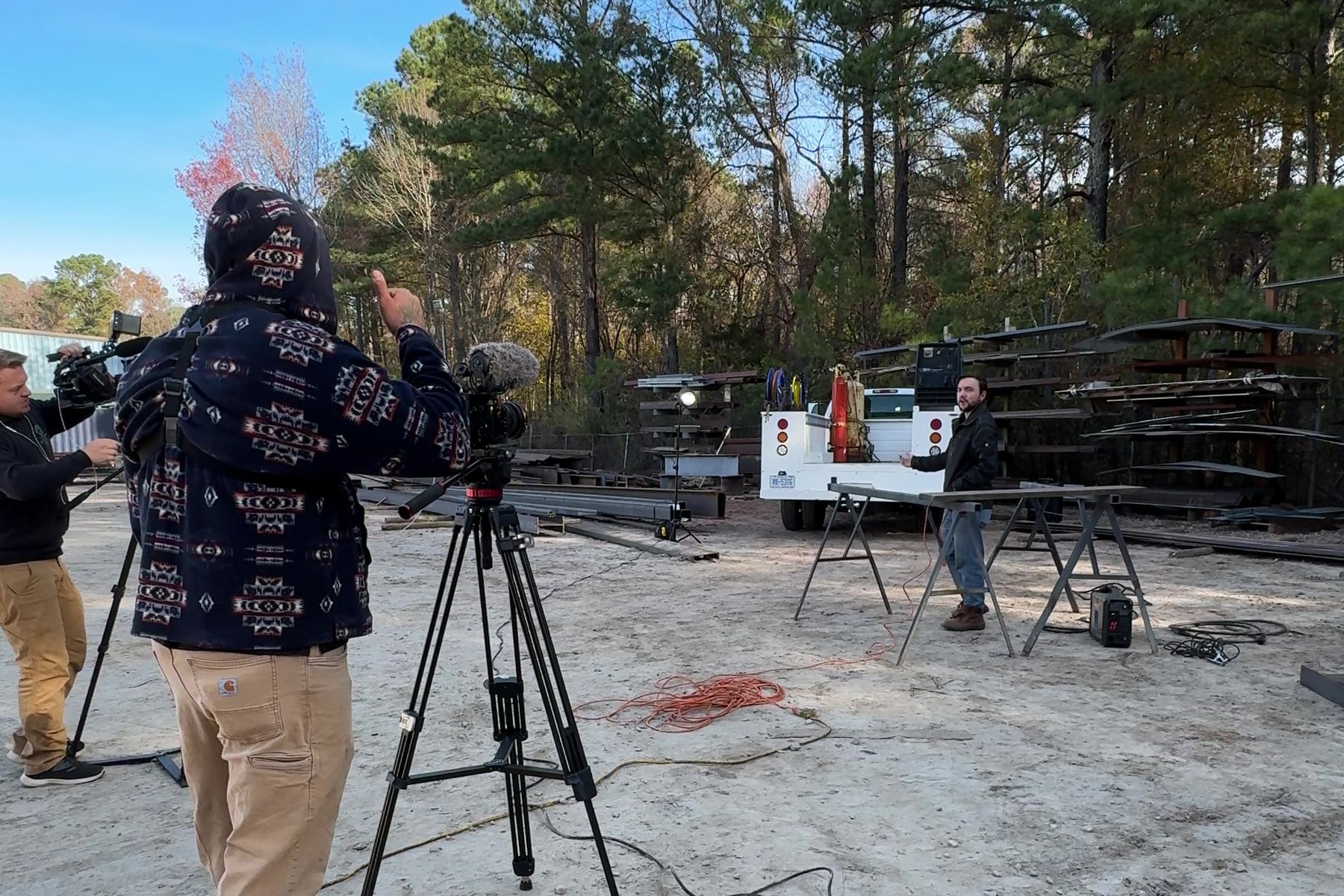
Video makes that kind of course land. A failure mode filmed in a mockup, a test running, a crew getting a detail right and wrong. It also means every rep teaches the same course the same way. Here is how to run an AIA lunch and learn that gets you specified.
Show up the way architects ask
AIA ran the study again in 2018, with 400 completed architect surveys. 73 percent said they prefer to deal with a rep through a face to face meeting or a lunch and learn. Only 36 percent were satisfied with how responsive the reps they come across are.
That second number is your opening. Most of your competitors are slow. The rep who answers the same day, knows the details cold and is honest about where another product fits better becomes the first call.
Video helps the rep who cannot be in every office. A short install clip sent the same afternoon answers the question before the next meeting, and every rep on your team explains the detail the same way.
Installation video architects actually use
In the 2016 survey, more than half of respondents said installation instructions are important information at the review and approval stage. That is when a submittal lands on someone's desk and they decide whether to trust it.
Film a full install, start to finish. Not a render. When we filmed The Flame Detector, a home fire detector, one of the three videos from that test day was a setup walkthrough. Box to connected in three minutes. Three AA batteries, a magnetic bracket and an app. It answers the question nobody asks out loud, which is whether this will be a project.
Show the details that go wrong. The corner, the transition, the fastening pattern, the cure time. Those are the lines in Part 3, and the places a crew is most likely to guess.
Put the installer on camera. The contractor who uses your product every week is more believable than your rep, and contractors are worth filming in their own right. We filmed a contractor appreciation day for Prism Paint and Benjamin Moore as a short event documentary.
Show it finished, in a building people use. A finished room shows what your product looks like when the job is done, not on a sample board. We document the Parade of Homes for the Home Builders Association of Winston-Salem, and one walkthrough of a finished house gave Quality Workx twelve short videos.
Show where it is made, if that helps you. AIA's 2026 specification report found 72 percent of architects prefer U.S. manufactured products. If you make it in North Carolina, let them see the plant. More on our manufacturing video production.
Make it easy to write in
Find the person who writes the spec. At many firms the designer picks the product and a specifications writer turns it into the project manual. Learn who that is at the firms you call on. That person decides whether your product reads as the standard or the substitute.
Give them text they can edit. A three part section written for your product, with the standards and test methods named, saves a spec writer an afternoon on deadline. Keep it current. Outdated spec text is worse than none.
Aim to be the basis of design. Many specs name one product as the basis of design and list others that may be accepted. The basis of design sets the bar every other product has to meet, so that is the line worth earning.
Answer fast when drawings are due. While construction documents are being finished, a question that sits for a week can get your product swapped for one whose rep answered that day. The same goes for submittals once the job is built.
Put the files where they look. CAD and BIM details, installation instructions, test reports and spec text on one page, with no form in the way. An architect who has to ask for a file usually picks the product that did not make them ask.
The 2018 study put numbers on it. 74 percent of architects said they will leave a manufacturer's website if they cannot find what they need, and for every architect who calls about missing information, two go to a competitor's site instead. Your website is the rep that never sleeps, so make it answer.
Have the sustainability data ready
On projects chasing LEED, the spec writer is counting. LEED v4.1 gives a point when a project uses at least 20 permanently installed products from at least five manufacturers that have Environmental Product Declarations. A similar credit counts products that disclose their ingredients through a Health Product Declaration or a Declare label.
If your product has an EPD and the one beside it does not, you just helped the architect hit a number. Put the EPD and HPD on the product page next to the spec text, not behind a request form.
Be listed where specs get written
Spec writers do not start from a search engine every time. Many work inside libraries built for the job.
ARCAT is free for architects, with no registration, and holds spec text in CSI three part format, CAD details, BIM objects, EPDs and installation videos. Deltek's Specpoint lists more than 50,000 products, with spec text a specifier can add to a project in one click, and its listing cards carry videos and technical documents.
That is where an install video earns its keep. It sits beside your spec text at the moment someone is deciding whether to write you in.
Where video does not help
Video gets attention and explains. It does not get you specified on its own.
Architects still need test reports, code evaluations, CAD and BIM details, warranty terms and spec text they can paste. If those are missing, a good video only shows them what they cannot use.
Think of video as the thing that gets your data opened. Plenty of building products end up inside a wall, so more on marketing a product nobody ever sees.
Questions building product makers ask
How do I get an architect to spec my product?
Teach them through continuing education before a project starts. Give the spec writer three part text and files they can use without asking. Show how the product goes in. Then answer fast when drawings are due.
What does basis of design mean?
It is the product the spec names as the standard. Other products can be accepted, but they have to meet the bar it sets, so it is the line worth earning.
Can I get my product in after the spec is written?
Sometimes, through a substitution request. That usually takes product data, installation procedures, similar completed installations, cost and schedule information, and the architect has to decide in time. It is easier to be written in from the start.
The short version
- Most architects know what they will specify before they research. In AIA's 2016 survey, 59 percent did.
- Continuing education is the front door. AIA members need 18 learning units a year, 12 in health, safety and welfare.
- Teach the subject, not the catalog. Product talk waits until the course ends.
- Film full installs, the details that go wrong, and the installer who trusts your product.
- 73 percent of architects prefer to meet a rep face to face or at a lunch and learn. Only 36 percent are happy with how fast reps respond.
- 74 percent will leave your website if they cannot find what they need.
- Have EPDs and HPDs ready. A LEED v4.1 point counts 20 products with EPDs.
- Get listed where specs get written, with the install video beside the spec text.
- Video gets your data opened. It does not replace the data.