
A spec writer has one decision to make when your product comes up: is it safe to name? Everything you send either makes that decision easy, or sends them to a manufacturer who already did the work.
That is the opportunity. Getting specified is less about a pitch and more about paperwork, proof and a person who answers, all ready before the spec writer goes looking.
Who writes the spec
On most commercial projects the specifications are written in the architect's office, sometimes with an outside specification consultant. The 2026 Architect's Journey to Specification report from the AIA, built with Deltek and ConstructConnect, found that architects remain central to product and material specification, and most are responsible for researching, evaluating and selecting products themselves.
They are writing a document a contractor will build from. If your product fails on the job, their name is on the page that put it there.
How a spec section is built
Most specs follow the Construction Specifications Institute's three part format. Part 1, General, covers the administrative and procedural requirements for the section. Part 2, Products, sets the quality of the products required. Part 3, Execution, covers the preparation and how those products get installed.
Part 2 needs your product described in words a spec writer can paste and edit. Part 3 needs your installation requirements written plainly enough that a crew follows them.
The ways a spec can name you
CSI describes four methods of specifying: descriptive, performance, reference standard and proprietary. A proprietary spec names manufacturers. In an open proprietary spec, a contractor can propose an equal product that is not named. In a closed one, no substitutes are allowed. Kevin O'Beirne, writing for CSI, notes that open and closed proprietary specs should name at least two manufacturers. Name one, and the spec is sole sourced.
Getting named matters more than it looks. O'Beirne points out that a substitute does not comply with the contract documents, so approving one takes a contract modification such as a change order, which the owner usually has to sign. Being named from the start skips that step, and so does being the product that clearly meets a performance spec.
What spec writers need from you
A guide spec they can edit. Your product written in the three part format, with the Part 2 language and the Part 3 installation steps filled in. A spec writer can adapt good language faster than they can write it from scratch.
Proof in the spec's own terms. Test reports to the standards the spec cites, listings, warranty terms and the limits of what the product can do. Adjectives do not survive a spec review. Test methods and numbers do.
Answers specific enough to end the questions. When we filmed for JD Paint Pros, we asked the general manager who hired them for their first commercial job why he picked them. Part of his answer: "I was impressed with the details of the quote. I didn't have to come back and question him about it because he was very specific on the paints he was going to use." A spec writer wants nothing left to call about too.
A person who answers. Questions come up mid project, on a deadline. Answer the same day and your product becomes the safe choice next time.
We covered how to earn that first meeting in how to get an architect to spec your product, and how to run a lunch and learn that gets you specified.
Where video helps a spec writer
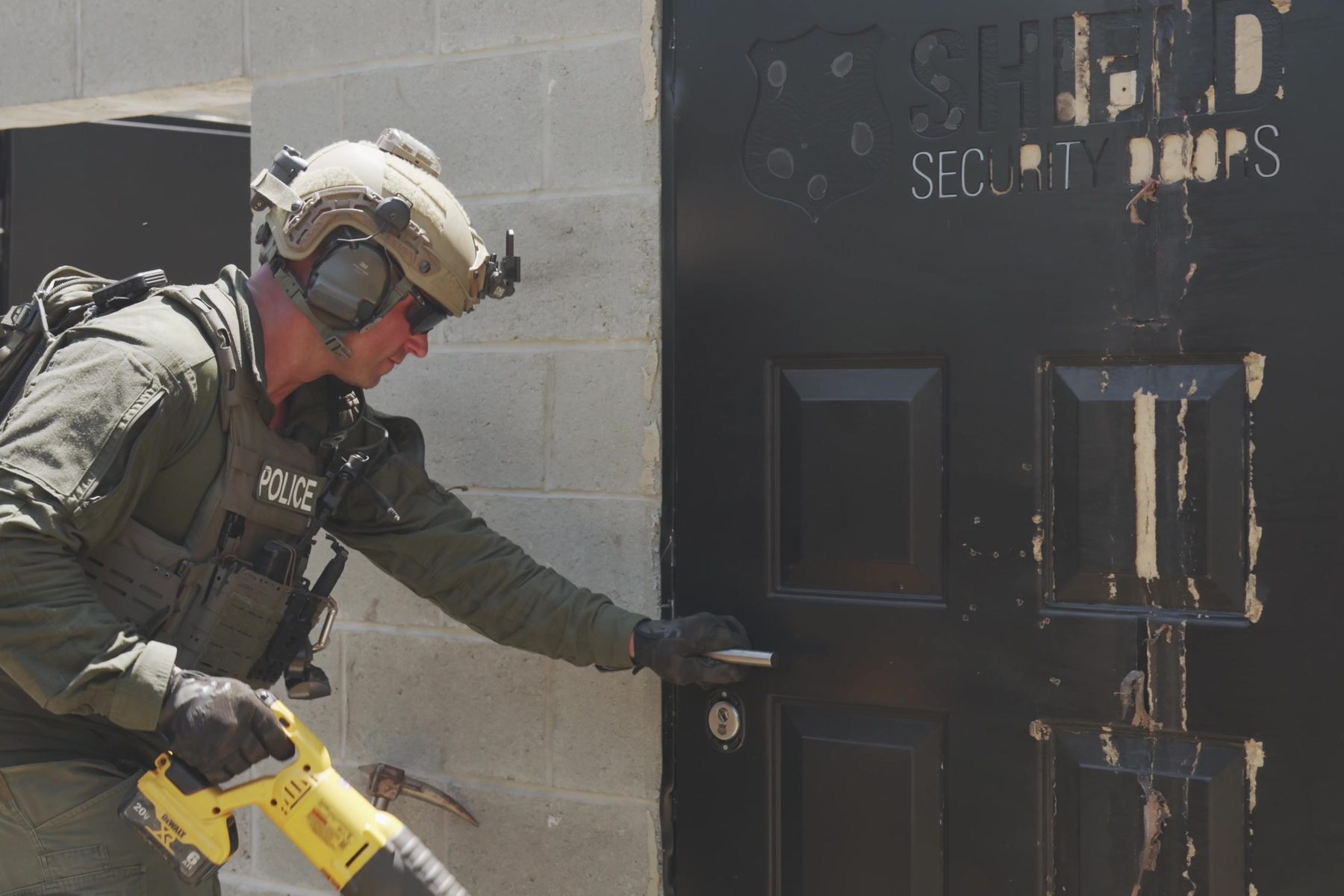
Proof under stress. A spec writer cannot visit every test lab, so bring the test to them. Shield Security Doors builds three lines of residential security doors, and from the sidewalk all three look like a normal front door. Everything that makes one worth more is inside it. So Shield brought in local SWAT teams with hydraulic tools and explosive breaching charges to try to get through three of their doors, and we filmed the whole day. A lieutenant with twenty years of SWAT experience said these were the toughest doors he had breached with his tools, tactics and technology.
Shield sells to homeowners, not through specs, but the lesson carries. When the value is hidden inside the product, let someone qualified try to break it on camera. More on filming a test you only get one shot at.
Proof next to the alternative. For The Flame Detector, we filmed a burn room with six common smoke alarms mounted beside their unit, then five different fires. Some of the six never activated at all. A side by side is evidence a spec writer can repeat to the owner.
Part 3 on video. The same test day produced a setup video. Three AA batteries, a magnetic bracket, an app, and three minutes from the box to a working unit. A short installation video shows a crew the order, the hands and the mistakes to avoid, which a paragraph in Part 3 cannot.
Keep the video beside the documents, on the product page with the guide spec and the test reports, so the spec writer finds everything in one place. More on product proof video and marketing a product nobody sees.
The short version
- A spec writer decides whether your product is safe to name. Make that decision easy before they have to ask.
- Give them a guide spec in the three part format, proof in the spec's own terms, and a person who answers the same day.
- Getting named beats getting approved later. A substitute takes a contract change the owner has to sign.
- Video brings the proof to their desk: a test under stress, a side by side, and an installation they can watch.