
Short answer first. An SOP covers a process: what happens, in what order, who is responsible and what gets recorded. A work instruction covers one task at one station, step by step. A job aid is the short reminder someone uses at the moment they do the task, like a checklist, a decision chart or a placard on the machine.
Most plants use all three, and most confusion comes from asking one of them to do another one's job. We covered the difference between SOPs and work instructions, and what ISO 9001 actually asks for, in another post. This one adds the job aid and puts all three side by side.
One task, three documents
Take lockout on a hydraulic press. OSHA's standard for the control of hazardous energy, 29 CFR 1910.147, requires employers to develop, document and use procedures for controlling hazardous energy.
The SOP is your energy control procedure. It says who is authorized to lock out, what has to happen before work starts, how the lockout gets verified and what gets recorded.
The work instruction is the lockout for press 4 specifically. Which disconnect, which valve, where the stored pressure bleeds off, and how to try the controls to confirm the press is dead.
The job aid is the placard on press 4 showing every isolation point with a photo and a number. Someone who has done the lockout a hundred times still checks it, because missing one point costs too much.
What a job aid is, and what it is not
A job aid supports someone while they work. It does not teach the task from zero. Good ones fit on one page or one screen, live where the work happens, and use the same names and numbers as the SOP. Common forms are checklists, short step lists, decision tables, flowcharts and labeled photos.
A job aid is only controlled if your quality system says so. If it carries a number someone will act on, like a torque value or a setting, treat it as controlled and update it the day the SOP changes.
How to pick the right one
Ask what the person needs at that moment.
Do they need to know who does what? That is the SOP.
Do they need to learn a motion they have never done? That is a work instruction, and it is where video earns its place.
Do they already know the task and need a reminder? That is a job aid.
A new hire leans on all three in the first month. Six months in, they mostly use the job aid. That is how it should work.
Where video fits in each
The SOP: rarely. The SOP is the controlled document an auditor asks for. A video can explain the reasons behind it, but it does not replace it.
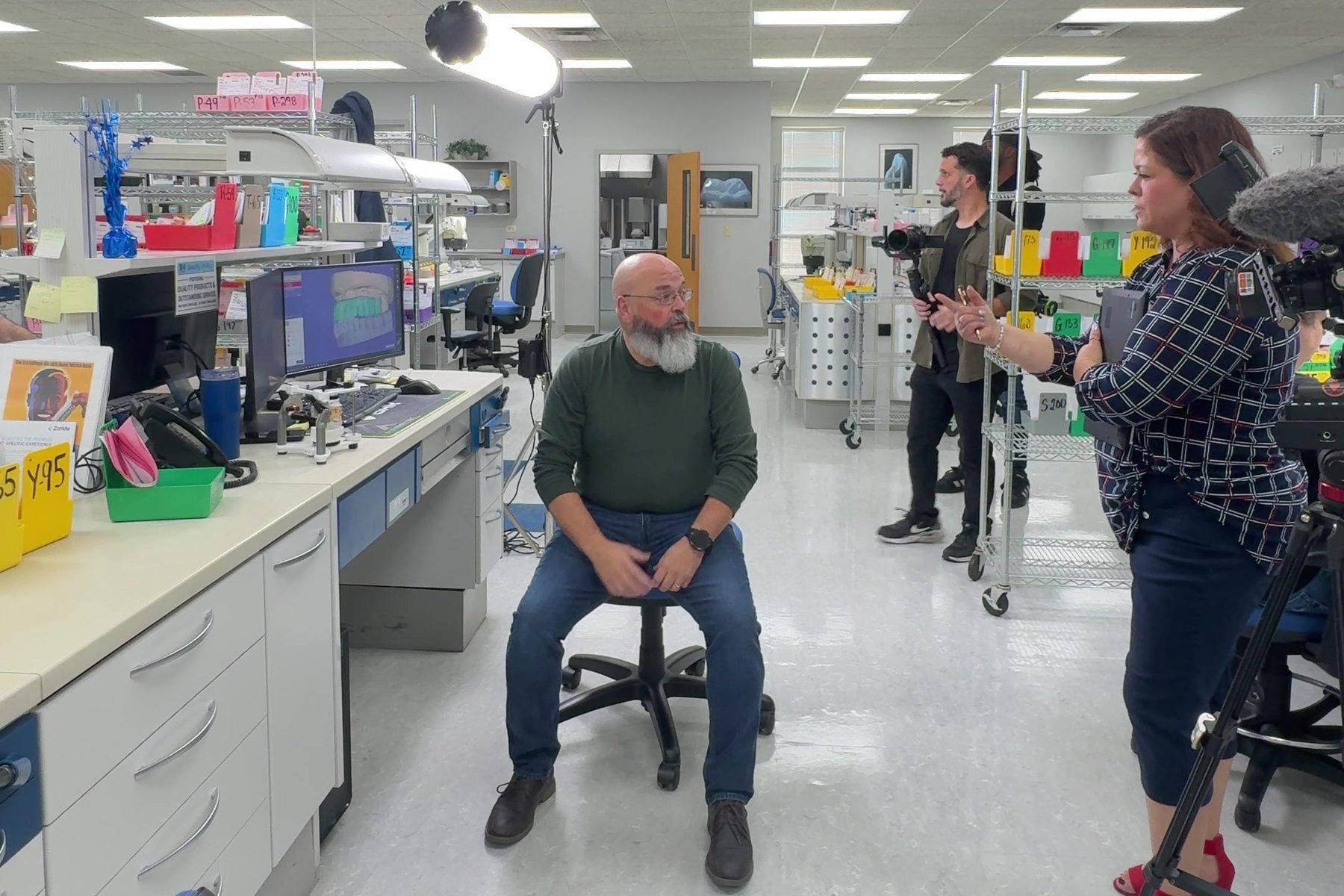
The work instruction: the best fit. Hands, order and position are what words describe badly. At Apex Dental Laboratory Group, the main sequence we filmed followed one technician through a complex case from start to fine detail, with macro shots of the hands. That is a work instruction in motion.
The job aid: a short clip. A twenty to thirty second clip behind a QR code on the placard covers the one step people get wrong. When we planned an ergonomics training program for a safety consulting firm, the list came to 42 separate video assets, many of them short clips like that, across four main settings in one to two filming days.
How to film it without slowing the floor
Film by setting, not by document order. In that ergonomics plan, the footage was grouped by location and setup, from the office to production, construction and material handling, so one setup could serve several modules. More on planning a day like that in whether to film the whole training class or break it up.
Shoot each action three ways. A wide shot, a medium and a close detail, with a few seconds of clean footage before and after each action. That gives an editor a full work instruction and a short job aid clip from the same take.
Keep records out of frame. At Apex we pulled every still showing a readable patient or dentist name before delivery. Batch records, screens and customer names deserve the same care. More on filming your plant without giving away your process.
Use the people who do the job. We have helped film training videos for a commercial construction company, on site with their own crew. People trust a procedure more when someone they know is doing it. More on who should be on camera and making training videos without an LMS.
The short version
- An SOP says what happens and who owns it. A work instruction shows how one task is done. A job aid reminds someone at the moment they do it.
- Same task, three documents: the energy control procedure, the lockout steps for press 4, and the placard on press 4.
- Pick by what the person needs right then: who does what, how to do it, or a reminder.
- Video belongs in the work instruction, with short clips behind the job aid.