
You announced the expansion. New line, new jobs, a release with a quote from your CEO. Then the story ran as one line in a business roundup, and the evening news never called.
That is rarely about whether the news mattered. TV needs a picture for every second a story runs, and a release about square footage gives a producer nothing to put on screen.
You are not the only one announcing. Between January and the end of September 2025, North Carolina's governor announced more than 18,600 manufacturing jobs and more than 6.6 billion dollars in manufacturing investment, according to NC Commerce. That is a lot of news for the same few desks.
Why pictures matter more now
Fewer people are covering the news. Local TV newsrooms had 27,066 full time staff in 2024, down 2.9 percent from the year before, according to the RTDNA and Syracuse University survey. Newspapers have lost far more. Northwestern's Medill school counts more than 270,000 newspaper jobs gone since 2005, a loss of more than 75 percent.
A short staffed desk picks the story that arrives with pictures, people and a reason to run today.
When the trade site Plant Services wrote up a Greensboro manufacturer's expansion in December 2025, the story ran with a stock photo. Nobody did anything wrong. An editor with nothing from inside the plant reaches for stock.
What a newsroom needs to run it
A reason it is news today. Jobs, what they pay, when hiring starts, what you will make here that you could not before. In Muck Rack's 2026 survey of 1,044 journalists, 78 percent said a pitch feels "genuinely relevant when it directly affects the community their audience belongs to." Jobs in the county do that. Square footage does not.
A B roll package. Two or three minutes of plain clips with natural sound and no music, voiceover or logos. The building, the line running, hands on parts, new equipment, people at work. A newsroom cuts its own story, so give it raw material, not an ad.
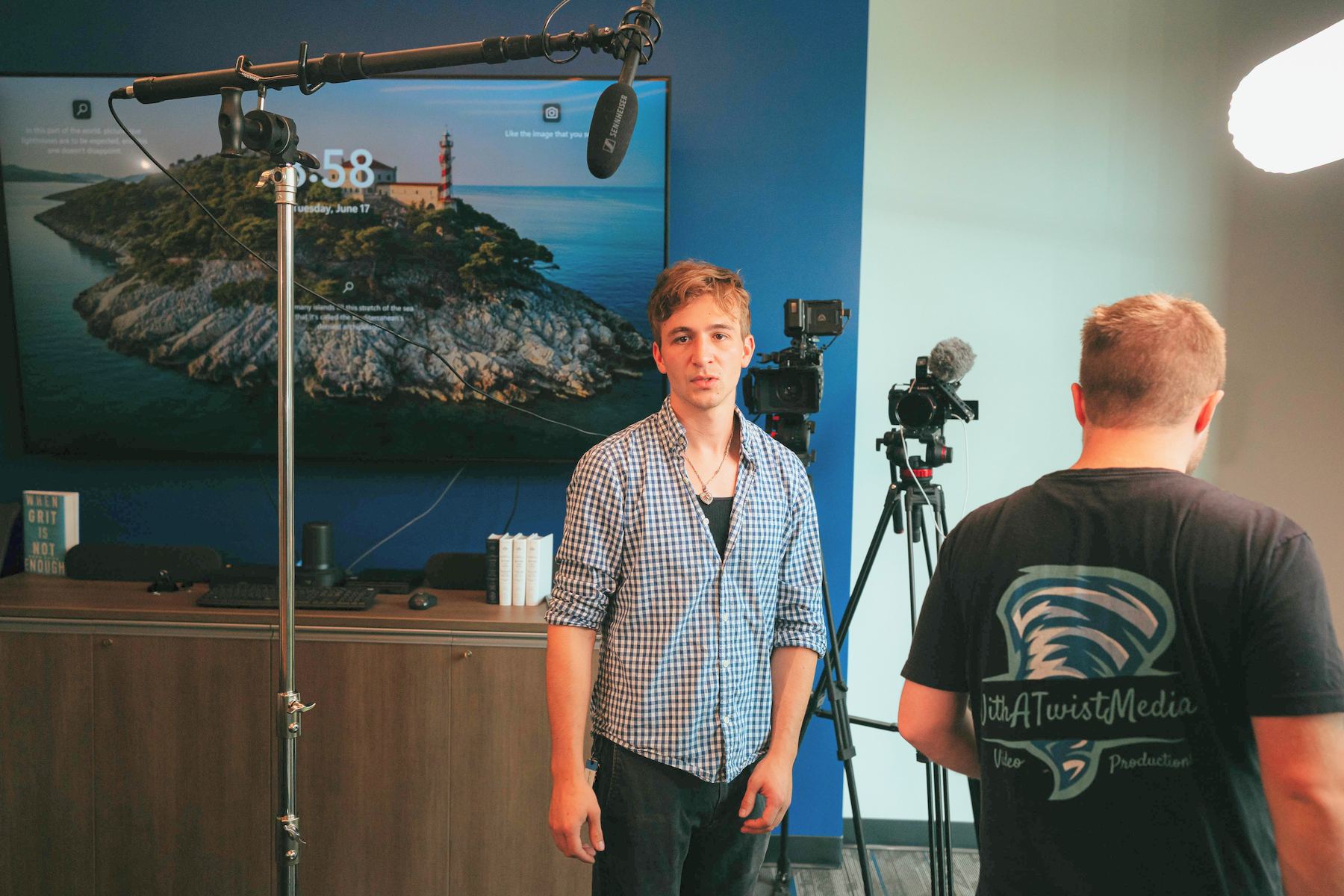
Short interviews, already filmed. The plant manager on what the expansion means, and an operator on what the work is like. Spell names and titles right, and offer the same people for live interviews.
One page of facts. Job counts, pay, the hiring timeline, what you make, where to apply, and one person who answers the phone that day.
Access, with rules. Some stations will shoot their own, which is good news. Have someone who can walk a crew in on short notice, safety gear at the door, and a list of what stays out of frame. Here is how to film your plant without giving away your process.
Timing and who to call
Film before the announcement. The empty building and the first machine coming off the truck only happen once, and footage shot afterward is too late.
If the state or county is making the announcement, ask their communications team when it goes public, and have the package ready to send that morning, as a link to a download folder.
Send it to the assignment desks at the Triad's TV stations, like WFMY and WXII, and to the business reporters at the Greensboro News and Record and the Triad Business Journal. Trade publications your customers read want capacity, equipment and lead times.
Keep each one short and on beat. In the same Muck Rack survey, 88 percent of journalists said they immediately disregard pitches that miss their beat.
What a package can and cannot do
You cannot buy news coverage. A newsroom decides what runs, and it should.
RTDNA's ethics guidance tells broadcast managers to ask first whether they can shoot the material themselves, and to label anything a company provides, along the lines of "video provided by" that company. It also asks them to weigh whether supplied video looks like product placement. That is why your package has no music and no slogans.
Expect some stations to send their own photographer anyway, and expect your clips to be labeled as yours.
A package makes yes easier. It does not guarantee it.
Where the footage goes next
The news cycle lasts a day or two. The footage lasts much longer.
The same shoot day that produces a B roll package can produce a manufacturing recruitment video for the jobs you just announced, a plant tour video for customers, and short clips for LinkedIn.
Film it in stages. For Quality Workx, a Burlington contractor, we came back to one full gut and rehab four times, from tearing out carpet to the finish. That became a four minute documentary and sixteen social videos. An expansion has the same arc: empty floor, equipment arriving, first parts, full shift.
Put people in it. At the Ethos Digital Lounge grand opening in Greensboro, every one of the 28 videos we delivered from one night was built around somebody talking. A ribbon cutting works the same way, if someone is there to ask questions.
Keep the line running. On a typical shoot, the only people who stop are the ones being interviewed, for about twenty minutes each.
The short version
Expansion news gets one line when a newsroom has nothing to show.
Give them local jobs, B roll with no music, short interviews and one page of facts.
Film before the announcement, so the package is ready that morning.
Newsrooms decide. Some will shoot their own, and supplied clips should be labeled.
The same footage keeps working for recruiting and customers.