
An Army Allied Trades Specialist spends years welding and machining. She reads your posting for a CNC machinist and keeps scrolling.
It asks for GD&T, setup experience and second shift. Her record says 91E. Nobody told her it is the same kind of work.
More than 20,000 service members enter North Carolina's civilian workforce each year, according to the Economic Development Partnership of North Carolina. Many come out of Camp Lejeune, Cherry Point, Seymour Johnson and Fort Bragg, which was Fort Liberty from 2023 until early 2025.
Plants already hire them. In 2025, 12.0 percent of employed veterans worked in manufacturing, against 9.0 percent of nonveterans, the Bureau of Labor Statistics found. The Manufacturing Institute's president credits them with leadership, discipline, teamwork and technical expertise.
Why the right people skip your posting
The skills carry over. The words do not.
In a 2019 Pew Research Center survey of 1,284 veterans, 78 percent of former officers said their service was useful in giving them skills and training for a civilian job. It was 59 percent for NCOs and 54 percent for enlisted personnel, the people most plant postings want.
Part of that gap is skills. A rifleman has probably never run a press brake. Part of it, we think, is translation. Military jobs go by codes, and plant postings by plant language. Career changers hit the same wall with biomanufacturing jobs that need no experience.
Translate the job before you post it
Look up your own jobs. My Next Move for Veterans, a free Labor Department tool, lists related military jobs for each civilian career. For machinists, that includes the Army's 91E Allied Trades Specialist and the Navy's Machinery Repairman. Put those codes in your posting.
Describe the work too. Codes change. The Marine Corps merged its Machinist code into a new Fabrication Specialist code on October 1, 2026. Say what the person does on a shift and name the equipment.
Post where they look. NCWorks Online, the state's job search portal, shows veterans new postings 24 hours before the public and lets employers search for veteran candidates. NC4ME, the state's military employment partnership, runs hiring events.
Meet them before they leave. DoD SkillBridge lets service members train full time with a civilian employer during their last 180 days of service, still paid by the Defense Department, with their commander's approval. Your company applies for approval first, in set enrollment windows. No job is promised, but you see their work for up to six months before an offer.
Let a veteran on your floor do the translating
A recruiter can list the skills that carry over. A veteran who already works for you can say which ones did.
Who to film. Someone who left the service and has been with you a year or more.
What carried over. Ask what they already knew how to do on day one here, not how the military prepared them. When we filmed for JD Paint Pros, we asked their client why he picked them over the other quotes, and the answers came back specific: response time, the detail in the quote, the prep work.
What was hard. The first month, what nobody explained, what they would tell someone still in uniform. Our post on the realistic job preview explains why the hard parts make the rest believable.
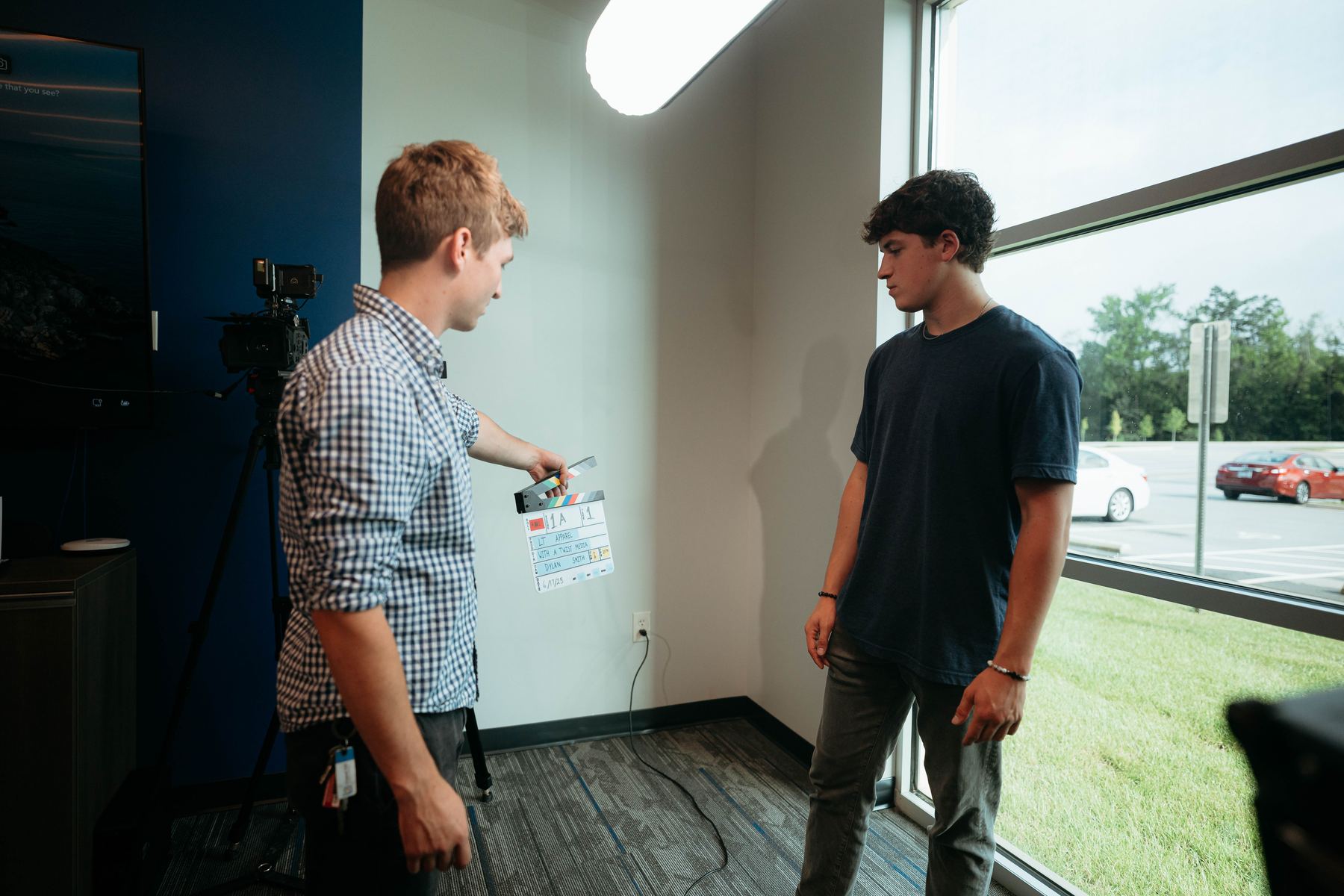
Keep it short. At the Ethos Digital Lounge grand opening in Greensboro, fifteen to eighteen guests sat down with us, and each clip ran thirty seconds or less. More voices, more chances for a reader to see themselves.
Keep it on the work. Some veterans would rather not discuss their service on camera. Respect that, and skip deployments, injuries and how they left.
None of this stops the line. We interview while the floor keeps running and are out by mid afternoon. The rest of what a recruiting video should show still applies.
Where video does not help
Video will not rewrite your posting or tell you whether a 91E can run your machine. A skills test and a shop tour do that. It will not fix pay, or a supervisor who shrugs at military experience.
If nobody on your floor has served, do not borrow a veteran or use stock footage of soldiers. Start with the posting and SkillBridge, and film your first veteran hire a year in.
Keep the hiring side legal
USERRA. You cannot refuse to hire someone because of military service or an obligation to serve, and Guard and Reserve members generally get their jobs back after service.
VEVRAA. Covered federal contractors generally must list most openings with the state job bank, which here is NCWorks Online.
Disability and discharge. The EEOC says employers generally may not ask applicants medical questions before an offer, including whether someone is a disabled veteran, except as voluntary self identification for affirmative action. Employment lawyers also advise against asking about discharge type, since the answer can reveal a disability.
The short version
Veterans have the habits plants want, but many can't see themselves in a plant posting.
Put related military codes in the posting and describe the work plainly.
Post on NCWorks Online, and use SkillBridge to meet people in their last 180 days.
Film a veteran on your floor saying what carried over and what was hard.
Video will not rewrite the posting or test skills. Keep disability and discharge out of the interview.